
I have watched the sun rise over Angkor Wat more mornings than I can count. Fifteen years of guiding means fifteen years of 4:30 AM alarms, and I still walk to the reflecting pool every single time with the same feeling I had on my first sunrise tour. If you are planning your trip to Siem Reap and searching for the best spot to watch sunrise at Angkor Wat, I want to give you an honest answer — not the version you read on ten different travel blogs that all copy each other, but what actually works, based on what I see happen every morning.
The Short Answer
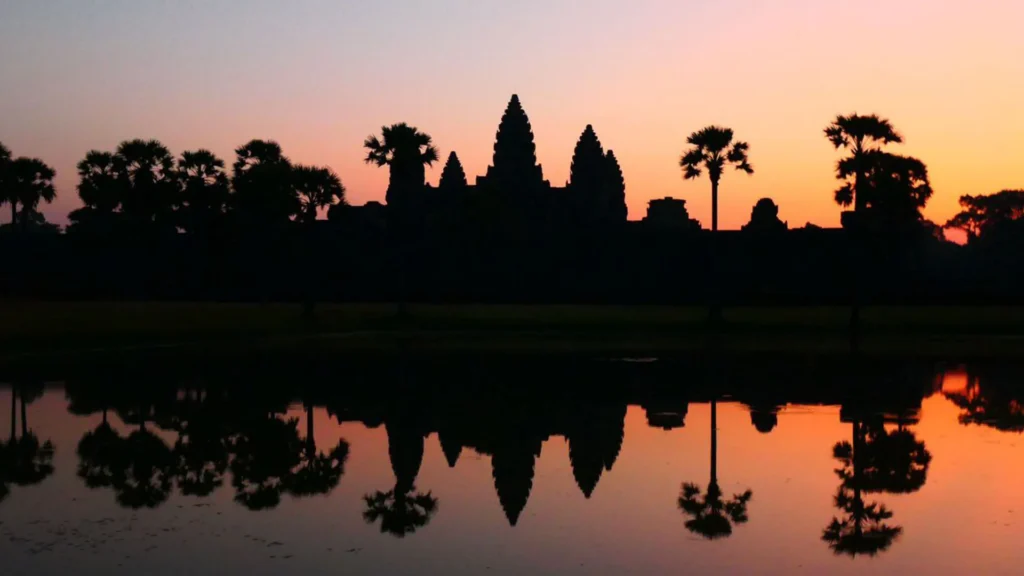
The best spot is the left-hand side of the northern reflecting pool, roughly 40 to 50 meters from the main causeway. Most visitors walk straight to the pool directly in front of the main entrance and crowd into the same narrow strip of grass. That spot gives you the classic postcard shot — but you will be shoulder to shoulder with two hundred other people, most of them holding phones over their heads.
The northern pool, just a short walk to the left after you cross the moat, gives you nearly the same reflection angle with a fraction of the crowd. I have taken guests there on mornings when the main pool had three hundred people and our spot had eleven.
Why the Northern Pool Works
Angkor Wat faces west, which is unusual for a temple in this region — most Khmer temples face east. Because of this orientation, the sun actually rises behind the temple, not in front of it, which is why the silhouette effect works so beautifully over the reflecting pools. The five towers block direct sunlight as it rises, creating that dramatic dark silhouette against a brightening sky before the light spills around the edges.
The northern pool sits at a slightly different angle to the main axis of the temple. You still get the full five-tower silhouette and the reflection in the water, but because fewer people know about this angle, you get more space to set up a tripod, more time to wait for the perfect moment, and considerably less noise and movement in your shots.
What Time to Actually Arrive
This is where most guides and blogs get it wrong. They tell you “arrive by 5:00 AM” as if that is a fixed rule. It is not. Sunrise time in Siem Reap shifts by almost an hour across the year:
- November to January: sunrise is around 6:00 to 6:20 AM. I recommend arriving by 5:15 AM.
- February to April: sunrise moves earlier, around 5:45 to 6:00 AM. Arrive by 5:00 AM.
- May to October (wet season): sunrise is earliest, around 5:30 to 5:45 AM. Arrive by 4:45 AM if you want the best position, since this is also when the temple opens and locals as well as tourists are moving fast to claim spots.
I check the exact sunrise time the night before every tour using a simple weather app, because a twenty-minute miscalculation is the difference between getting your spot and standing behind a wall of tripods.
What the Weather Actually Does to Your Photos
Here is something most articles will not tell you honestly: a completely clear sky is not always the best sunrise. Angkor Wat sunrise photography works best when there is a moderate amount of cloud cover — around 30 to 60 percent. Clouds catch the early light and turn orange, pink, and gold, giving you the dramatic sky you see in the best photographs. A totally clear sky often just turns pale yellow with no real color.
The driest months, February through April, tend to have the clearest skies, which sounds ideal but sometimes produces flatter, less colorful mornings. The shoulder months — November, early December, and late April into May — often produce the most spectacular skies because there is just enough moisture in the air for color without heavy rain clouds blocking the view entirely.
Avoiding the Crowd Without Missing the Moment
Guests often ask me if there is a way to see Angkor Wat sunrise without any crowds at all. The honest answer is no — this is one of the most visited sunrise locations on earth, and during peak season (December through February) you will always share the experience with other people. What you can control is how much that affects you.
Beyond the northern pool, I sometimes take guests to the eastern side of the temple complex, behind the main structure, for a completely different experience. You will not get the classic five-tower silhouette reflection here, but you will get the temple glowing gold from the opposite direction as the sun actually clears the horizon, almost always with nobody else around. I save this option for guests on their second or third visit to Angkor, or those who tell me upfront that photography, not the postcard shot, is their priority.
A Practical Tip Nobody Mentions
Bring a small flashlight or use your phone’s flashlight function for the walk in. The path from the entrance to the reflecting pools is not well lit before sunrise, and the stone causeway has uneven sections. I have guided groups for years and I still watch my footing in the dark.
Also — and this surprises many guests — bring a light layer of clothing. Pre-dawn Siem Reap, even in the hot season, can feel surprisingly cool at 5:00 AM. You will be glad to have something to remove once the sun is up and the temperature climbs.
Frequently Asked Questions
What time should I arrive at Angkor Wat for sunrise? Arrival time depends on the season. In the dry season (November–April), arrive between 5:00 and 5:15 AM. In the wet season (May–October), arrive by 4:45 AM since sunrise comes earlier. Always check the exact local sunrise time the evening before your visit.
Is the northern reflecting pool really better than the main pool? For photography and a calmer experience, yes. You get nearly the same silhouette and reflection with significantly fewer people. For a first-time visitor who simply wants the classic, most photographed angle regardless of crowd size, the main pool in front of the causeway is still the iconic choice.
Do I need a guide to find the best sunrise spot? You do not strictly need one, but a licensed local guide who visits daily will know the current crowd patterns, the exact sunrise timing for your specific date, and can position you correctly before the light starts changing — which happens faster than most first-time visitors expect.
What if it’s cloudy or raining on the morning of my tour? Cloud cover, as explained above, often produces better color than a clear sky. Only heavy rain will genuinely ruin the experience, and even then, the temple itself remains extraordinary to explore once the rain passes. I always give guests an honest weather assessment the night before so they know what to expect.
If you would like to experience Angkor Wat sunrise with someone who has watched it happen several thousand times and knows exactly where to take you based on the season, the sky, and the crowd that particular morning, I would be glad to guide you. Message me on WhatsApp and I will help you plan the perfect sunrise morning, in English or Japanese.