
Guests often add a floating village to their Siem Reap itinerary almost as an afterthought — something to fill an afternoon after visiting the temples. Then they get back in the vehicle afterward and tell me it was one of the most memorable parts of their entire trip. I have guided both Kampong Phluk and Chong Khneas more times than I can count, and I want to explain honestly how they differ, because choosing the right one for your travel dates genuinely changes the experience.
Why Tonle Sap Matters
Tonle Sap is Southeast Asia’s largest freshwater lake, and it behaves unlike almost any other lake on earth. During the wet season, from roughly June to October, water flowing down from the Mekong River actually reverses the flow of the Tonle Sap River, pushing enormous volumes of water back into the lake. The lake can expand from around 2,700 square kilometers in the dry season to more than 16,000 square kilometers at the height of the flood — nearly six times its dry season size.
This dramatic seasonal flooding is exactly why the communities here live on the water rather than beside it. Entire villages — homes, schools, markets, temples, even basketball courts — are built to rise and fall with the water level, either on tall stilts or on structures that genuinely float and shift position throughout the year.
Kampong Phluk
Kampong Phluk sits roughly 16 kilometers southeast of Siem Reap and is built almost entirely on tall wooden stilts, some rising six meters or more above the ground. In the dry season, when the water has receded, you can actually walk or drive beneath the village and see the full height of these stilts — it is a striking sight, houses suspended high above dry, cracked earth, waiting for the water to return.
I usually recommend Kampong Phluk to guests visiting during the dry season, roughly November through May, because this is when the stilted structure of the village is most visually dramatic and easiest to appreciate. The boat journey to reach the village passes through a flooded mangrove forest, and depending on water levels, the guide will navigate narrow channels between submerged trees before opening into the main village and eventually the lake itself.
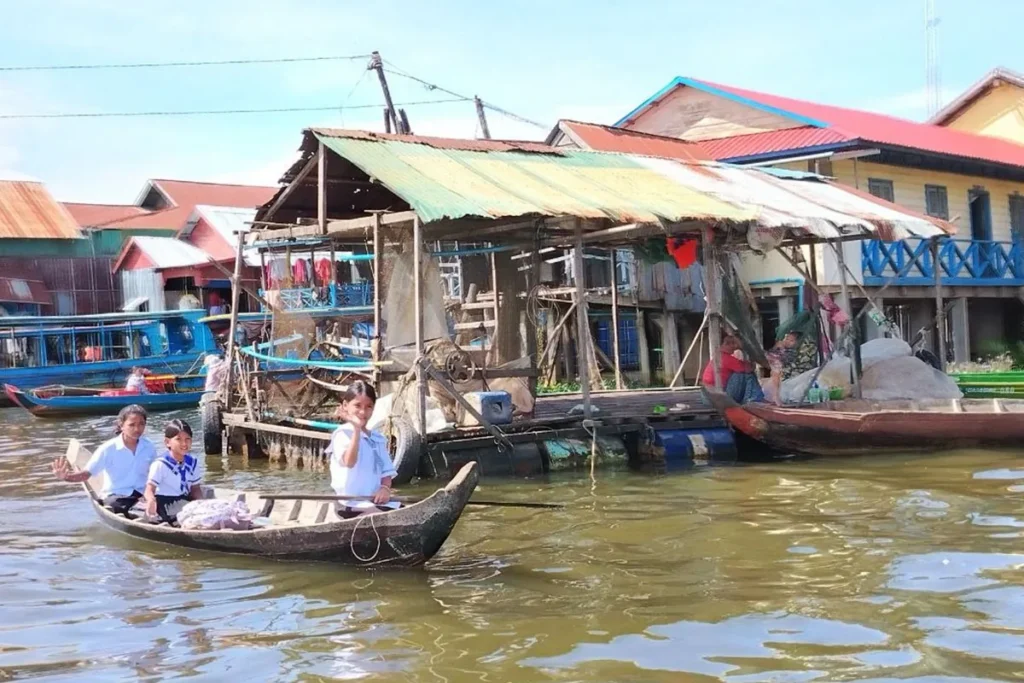
Kampong Phluk also tends to feel slightly more traditional and less set up for tourism than some alternatives — you will see genuine daily fishing activity, floating pig pens, and children paddling small boats to school, rather than a village that has reorganized itself primarily around visitor boats.
Chong Khneas
Chong Khneas is closer to Siem Reap, roughly 11 kilometers away, making it the more commonly visited floating village simply due to convenience. Unlike Kampong Phluk’s tall stilted houses, Chong Khneas is built with genuinely floating structures — homes, shops, even a floating school and a floating basketball court, all resting directly on the water’s surface and shifting position as needed throughout the year.
Because Chong Khneas is closer and more established as a tourist destination, it tends to have a higher volume of visitor boats, particularly during peak season. I am honest with guests about this — if a completely quiet, undisturbed experience is your priority, Kampong Phluk usually delivers that more reliably. But Chong Khneas has its own advantages: the shorter drive means less time in the vehicle and more time on the water, and the genuinely floating (rather than stilted) architecture is a fascinating engineering detail in its own right.
Chong Khneas is also a practical choice year-round, since its floating design means the village remains fully accessible regardless of season, whereas Kampong Phluk’s character changes more dramatically between wet and dry months.
What Actually Happens on the Boat
Regardless of which village you visit, the structure of the experience is similar. A private or shared motorboat takes you from the dock through the village itself — past homes, a floating pagoda, floating shops selling drinks and snacks, and often fish farms where families raise crocodiles or fish in submerged cages beneath their houses. Guides typically explain the practical realities of water-based life: how children get to school, how electricity and fresh water are managed, how families adapt their entire structure or lifestyle to a six-meter seasonal water level change.
Many boat routes then continue out onto the open lake itself, where — weather permitting — you can watch the sun set over water that stretches to the horizon in every direction. This open-lake sunset is, in my experience, the single moment guests remember most vividly afterward.
Best Time of Year to Visit
If your travel dates are flexible and the floating village experience is a genuine priority rather than an add-on, I generally suggest:
- November to February: Excellent for Kampong Phluk’s stilted architecture; cooler, more comfortable weather for the boat ride.
- March to May: Water levels are at their lowest; Kampong Phluk’s stilts are most dramatically visible, though some channels may require smaller boats to navigate.
- June to October: Water levels rise significantly; Chong Khneas becomes particularly interesting as the entire lake expands, and the flooded forest approach to either village becomes lush and green.
What to Bring
A hat and sunscreen are essential — there is very little shade once you are out on open water. A light rain jacket is worth packing during the wet season, even if the forecast looks clear, since conditions on the lake can change faster than on land. I also recommend a dry bag or plastic sleeve for phones and cameras; splashes are common, particularly when the boat picks up speed on the open lake.
Frequently Asked Questions
Which floating village is better — Kampong Phluk or Chong Khneas? Neither is objectively better; they suit different priorities. Kampong Phluk offers a more traditional, visually dramatic stilted village, particularly in the dry season, with a longer drive to reach it. Chong Khneas is closer to Siem Reap, features genuinely floating architecture, and is accessible year-round, though it can be busier with visitor boats.
Can I visit a floating village and the Angkor temples on the same day? Yes, and this is one of the most requested combinations I guide. A typical day covers the temples in the morning, when the light and temperature are best, followed by lunch, then the floating village and lake sunset in the afternoon.
Is the floating village tour suitable for children? Generally yes. Children are often fascinated by the floating schools, shops, and daily life on the water. I recommend a private boat over a shared one for families, allowing more flexibility with timing and comfort.
How long does the floating village tour take? A typical visit, including the drive from Siem Reap, the boat journey through the village, and time out on the open lake, takes around three to four hours. When combined with a full day of temple visits beforehand, the floating village portion is usually scheduled for the late afternoon into sunset.
Whether you are drawn to the dramatic stilted homes of Kampong Phluk or the practical floating engineering of Chong Khneas, I can help you decide which fits your travel dates and interests, and combine it seamlessly with your temple visits. Message me on WhatsApp and I will walk you through the options in English or Japanese.